



 In French
Video analysis
COPS #1 : Worldbuilding In French
Damien C• · Rôliskatonic ·
The first of three videos on C.O.P.S. looks at how its authors built the setting.
 The 35th
C.O.P.S. / POLICE TABLETOP RPG

C.O.P.S. is a French tabletop role-playing game about police investigations, first published in 2003. The original books are available only in French. The game opens in Los Angeles in 2030, four years after California seceded. You play detectives in the Central Organisation for Public Security, an elite LAPD unit that can take over any case in the county.
Written like a police TV series, the four seasons of C.O.P.S. tell one sprawling, interconnected story. A hundred recurring characters carry the consequences of your players’ choices from one case to the next. A single season might take in the kind of head-scratcher only L.A. could produce, an investigation that shakes all of California and the quieter dramas of everyday life.
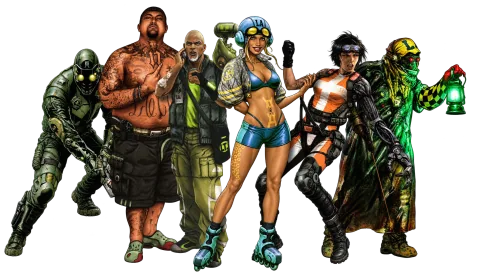
Artwork by Aleksi Briclot
When the third edition of Dungeons & Dragons was still new, C.O.P.S. left its mark on French roleplaying. The writers dug into the United States, its many cultures and its crime stories, then imagined a near-future California with every dial turned up. There’s a keen eye for how the city works and the wisecracks of an action comedy. The satire bites, and the crime drama can get bleak. Then you catch yourself asking how that kid you booked in season one is doing.
Players discover L.A. block by block, a city of sharp contrasts. Cross the street and you go from a neglected neighborhood to glass towers patrolled by drones. Think GTA V with flashes of Cyberpunk.
An investigation can play like The Wire, with pieces of the puzzle coming from tails, wiretaps and interviews. Your players can also take the same case in the direction of The Shield, chasing a suspect on foot or in a car and kicking the door in before the warrant comes through.
As GM, you set the tone, from the tension of Training Day to the humor of Bad Boys.
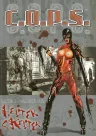
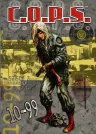
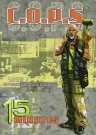
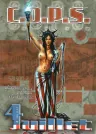
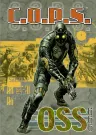
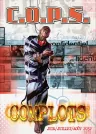
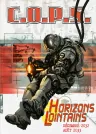
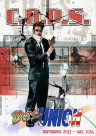
From Pilote to Endgame, browse all 17 books in campaign order across four seasons.
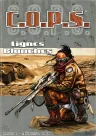
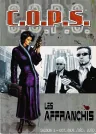
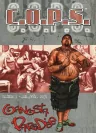
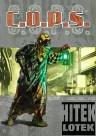


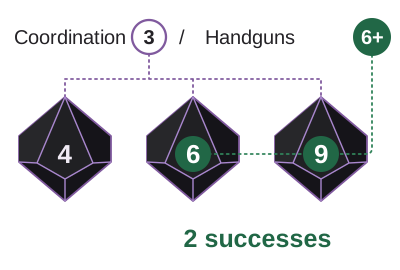
The C.O.P.S. D10 system uses 7 attributes and 27 skills. Some skills can be specialized as characters gain experience. A cop who improves their Long Guns skill can specialize in shotguns.
Pair an attribute with a skill according to what the character is trying to do.
Cops take training courses to learn techniques they can use in the field. The courses have multiple levels and grant bonuses and special abilities in roleplay and in the rules.
Your attribute tells you how many D10s to roll. Each die that meets or beats the skill’s target number counts as a success.
Each round, the player chooses their initiative and stance.
For a grittier game, the GM can include stray bullets and overpenetration. A round can keep going after hitting a suspect.
On foot or in a vehicle, the runner and the pursuer each start a chase with a handful of white D10s. Comparing the two handfuls tells you how far apart they are. A round of bidding can cost them dice. If the runner loses their last die, they have to stop. If the pursuer does, they lose their quarry.
After losing a bid, players can choose to take a risk to stay in the chase. Each risk puts black D10s in their hand.
When a maneuver goes wrong, the crash tables tell you what happens on foot or in a vehicle. Behind the wheel, that can be anything from a skid to a head-on collision.
A good detective owes a lot to their contacts. In C.O.P.S., decide whether each one is an ally or an informant.
Each contact has a relationship rating that can change from case to case. It reflects their reliability, commitment or loyalty and determines the risks they are willing to take for the detective.
Look after those relationships. Spend time with your contacts and think twice about the risks you’re asking them to take.
C.O.P.S. has interview rules for groups that prefer to leave some of the dialogue to the dice. Use them to take a bystander’s statement or question a suspect at the station.
The player chooses a method, such as eloquence, intimidation or rhetoric, and a stance, such as friendly or aggressive. The NPC’s affinities and weaknesses can shape their reaction. An opposed roll determines whether they stay silent, give you the essentials or reveal a new lead.
CRITICAL PERSPECTIVES
Reviews, video essays and first impressions show how players and GMs received the game.
In FrenchVideo analysis
Damien C• · Rôliskatonic ·
The first of three videos on C.O.P.S. looks at how its authors built the setting.
 In French
Video analysis
Damien C• · Rôliskatonic ·
The second video looks at the rules and the design choices that shape investigations.
 In French
Video analysis
Damien C• · Rôliskatonic ·
A look at how the book series develops over four seasons, with final thoughts on the game.
For GMs. Discusses campaign content.
Written review
Yoda Mister · JDR Café Bordeaux ·
A return to the game after years of running it, with a look at the depth and coherence of the series and the work it asks of the GM.
 In French
Video overview
Vieux Geeks ·
Vieux Geeks presents the core rulebook and GM screen, a first look at C.O.P.S. before diving into the supplements.
 In French
Video series
Vieux Geeks
A video tour of the supplements, season by season.
For GMs. Discusses scenario content.
 In French
Video overview
Magnamagister · TABULA RASA ·
Magnamagister takes C.O.P.S. off the shelf for an episode of “On dépoussière !” and walks through the game and its supplements.
Discusses the contents of the book series.
Written review
GIL & Saphie · La Ligue Ludique
A review of the core rulebook, its atmosphere and rules, with a look at character creation and GM preparation.
BEHIND THE GAME
Nicolas Benoist, CROC and Geoffrey Picard created C.O.P.S. Hear from the people who wrote it, edited it and helped bring the series to life.


Geoffrey Picard talks to Rôliskatonic about his writing and his role as series editor at Asmodée.
Geoffrey Picard describes how C.O.P.S. began, how the book series came together and the decisions that shaped the game.


Nicolas Benoist reflects on C.O.P.S. and his time at Asmodée, then discusses RPG distribution and the role of game stores.


Charlotte Bousquet talks about her writing, the C.O.P.S. novel and the L.A.P.D. Blues. The broader conversation covers tabletop RPGs and her perspective on the series.


In the second part of his interview, Croc recalls his years at Siroz and Asmodée and revisits his games, from Bitume to C.O.P.S.
Croc recalls his contribution to the core rulebook, the writing of investigations and the cohesion of the group.


Benoît Attinost describes writing with the setting and its recurring characters in mind, and how Asmodée organized the C.O.P.S. series.


One of the contributors remembers the team, the freedom they had as writers and the L.A.P.D. Blues.
Sandy Julien talks about the collaborative writing of C.O.P.S., what motivates him as a writer and how RPGs have changed since the 2000s.
